Tradition as a Foundation, not a Prison - Vanashree Rao
- Sandip Soparrkar
- 08 Oct, 2026
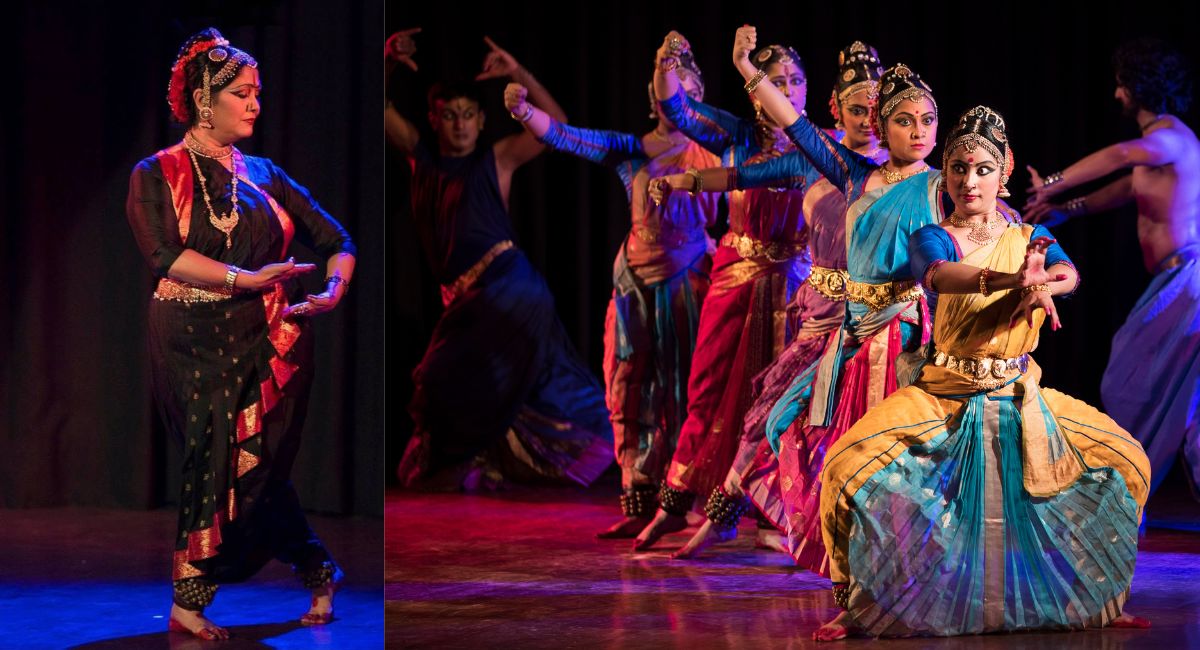
Vanashree Rao, a Sangeet Natak Akademi awardee and celebrated Kuchipudi dancer-choreographer, has spent decades expanding the form’s boundaries while honouring its grammar. Through Rasa United, she has brought Kuchipudi into dialogue with Bharatanatyam and Chhau, and runs a Kalamkari enterprise. She reflects on her late start, marriage to her guru, creativity, and the balance between tradition and innovation.
You began learning classical dance relatively late. What drew you to Kuchipudi?
I began learning dance seriously after my education, at around 20. My first guru was Krishna Kumar, who directed me to Jayarama Rao.
When I met Jayarama Rao, I was fascinated by his knowledge and wondered why he was not performing more. I told him I would also help find performance opportunities. We began performing duets, and dance became central to our lives.
I also learnt Odissi under Guru Mayadhar Raut, studied abhinaya with Nataraja Ramakrishna and later learnt from Vempati Chinna Satyam. Each greatly broadened my artistic perspective. Each shaped my understanding of movement, expression and storytelling.
You eventually married your guru. How has that shaped your life?
It is unusual. When you marry your guru, you cannot leave the guru at the studio and come home to your husband. The worlds overlap.
We married in 1981, when there was little work, and built our careers together. Dance brought us together because we wanted to perform and propagate Kuchipudi.
On stage, he is my guru, colleague and dance partner; at home, he is my husband. There are disagreements, but also enormous respect. Our shared commitment to dance remains a strong bond.
How do you balance tradition with experimentation in Kuchipudi?
Kuchipudi is fundamentally a dramatic tradition, and storytelling is one of its greatest strengths. But if we become too attached to established formats, we stop exploring what else the form can communicate. I believe tradition should provide a foundation, not a prison. The grammar must remain intact, but its use can evolve. Through Abhimanyu Vadh, Dushasana Vadh, Tryambakam and Dramatic Tales, I have explored this. With Rasa United, we have brought Kuchipudi together with Bharatanatyam and Chhau while retaining its dramatic character.
How do dance and your Kalamkari work influence each other?
For me, they are not separate worlds. Both require imagination, discipline and aesthetics. There was a time when my Kalamkari business was doing well, and I considered leaving dance. But I realised I could never completely walk away from it. They feed each other. Colour, costume, design and visual composition influence my productions, while dance gives me movement and imagination.
What drives your approach to choreography?
Curiosity. I do not want to repeat something simply because it has always been done. The story comes first: how can it be told most powerfully, and what should the audience feel? Then come movement, music, rhythm, costume and staging. Innovation should serve the story, not merely appear different. Classical dance can be contemporary in its thinking without becoming contemporary dance. The vocabulary may be ancient, but the artist’s imagination must stay alive.
What does recognition mean to you?
Awards acknowledge and encourage your work, but cannot be the reason you create. The greatest recognition is when audiences connect, students surpass you, or someone sees Kuchipudi differently. Ultimately, an artist should not work towards a trophy, but towards leaving something meaningful behind.

Follow Us
Related Posts