

Fossil to Biofuels: The sustainable shift
- Prajakta Chavan Rane
- 23 Sep, 2026
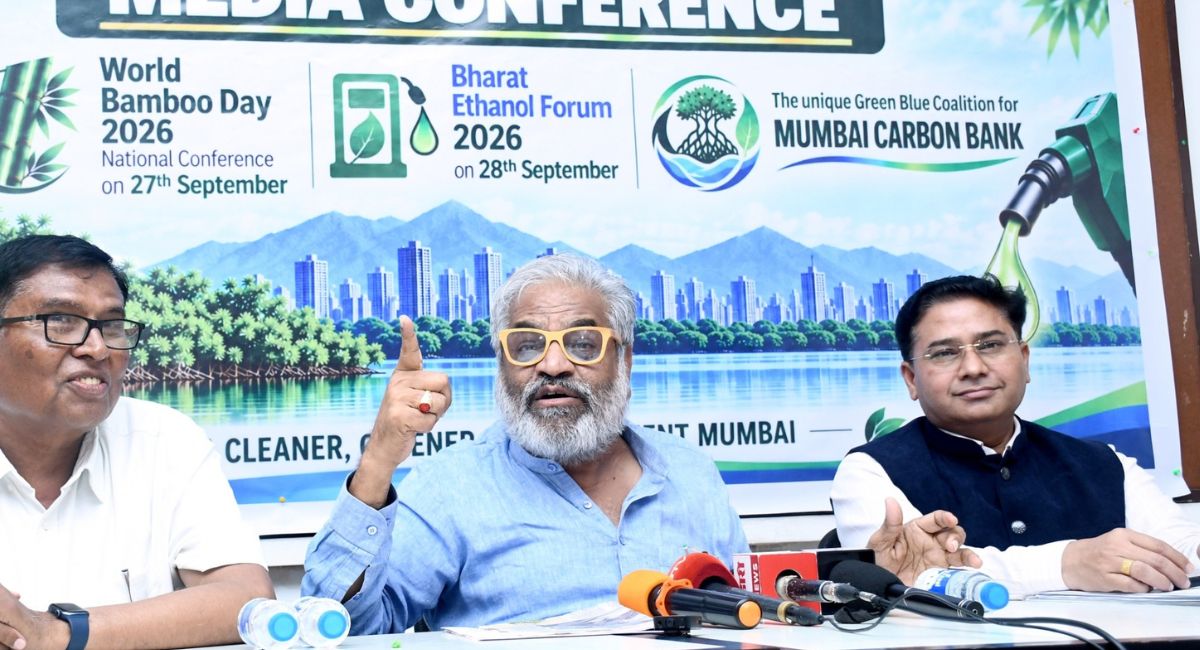
Mumbai: India must move away from fossil fuels and increasingly rely on biofuels produced from agricultural resources such as bamboo, Pasha Patel, executive chairman of the Chief Minister's Environment and Sustainable Development Task Force, said at a media briefing in Mumbai on September 23.
"If we want to live, if human existence is to survive, we will have to stop burning fossil fuel and burn biofuel," Patel said. He said energy should increasingly come from the land rather than underground fossil-fuel reserves.
Highlighting bamboo's potential, Patel said, “India has around 10 million hectares under bamboo compared with China's five million hectares, but its bamboo industry generates only about Rs 18,000 crore in annual turnover, against China's Rs 3.2 lakh crore. He attributed the difference to greater value addition and focused cultivation in China.”
Patel also highlighted bamboo's lower water requirement compared with sugarcane and its potential to produce methanol and other industrial products. Maharashtra provides assistance of up to Rs 7.5 lakh per hectare for bamboo plantations, he said, adding that the state's bamboo industrial policy aims to attract Rs 50,000 crore in investment.
On ethanol, Dr Atul Kharate, Chairperson of the IFGE – Western Region Council, said, “Ethanol blending has generated significant savings and benefited the rural economy. The video of ants in ethanol that went viral was found on investigation to be completely fabricated." He added that mileage may decline by around 2 to 2.5 per cent and said India is moving beyond E20 towards 25 per cent ethanol blending.
Dilip Shivdas Patil, managing director of Samarth Sahakari Sakhar Karkhana and co-chairman of the IFGE Sugar Bioenergy Forum, rejected the claim that a litre of ethanol needs 10,000 litres of water. "It is a misconception. The factory reuses the condensate water, and only 3 litres of raw water is needed," he said. He added that bamboo also yields furfural, acetic acid and lignin, which can be used for bio-bitumen.
B N Kumar, founder-director of NatConnect Foundation, senior journalist and author, briefed reporters on the carbon market. Kumar has campaigned for more than five decades for the protection of wetlands, mangroves and coastal ecosystems in the Mumbai Metropolitan Region.
