Padma Shri Roshan Kumari : A Life That Danced Beyond Time
- Sandip Soparrkar
- 22 Oct, 2026
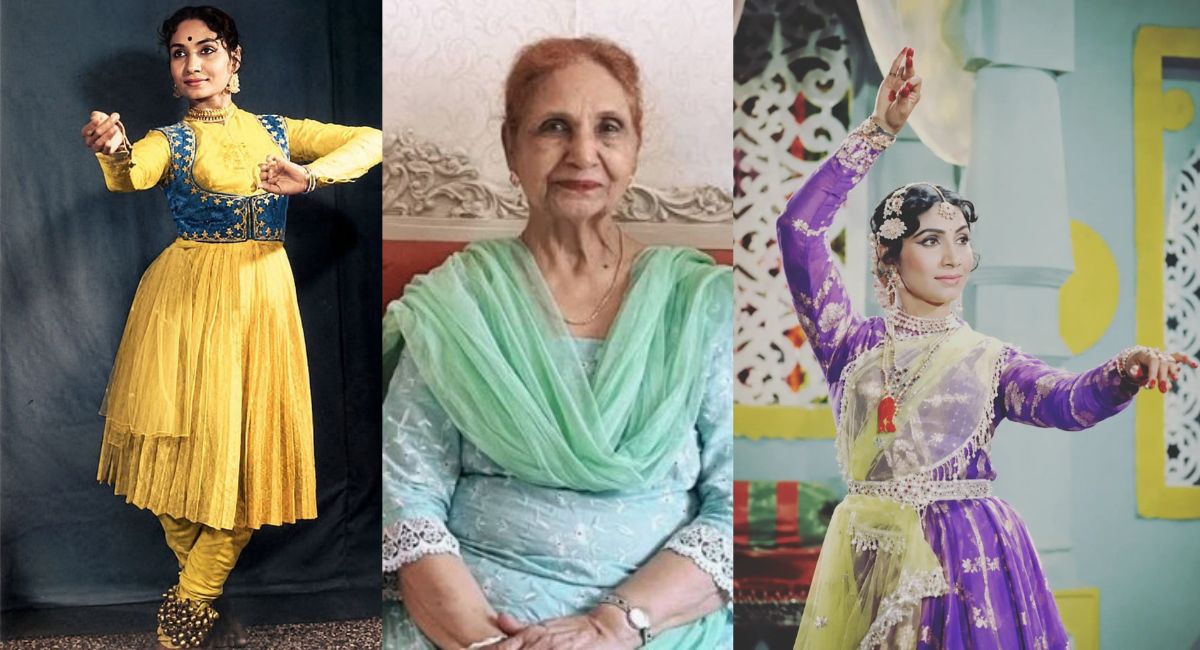
Indian classical dance has lost one of its distinguished exponents with the passing of Padma Shri Roshan Kumari, a celebrated Kathak dancer who upheld the traditions of the Jaipur Gharana with remarkable discipline, power and grace. Her legacy extends beyond awards and performances to the generations of dancers she inspired and the traditions she helped preserve.
Born in Ambala into a family steeped in music, Roshan Kumari was the daughter of percussionist Choudhury Fakir Mohammed and celebrated singer Zohrabai Ambalewali. Surrounded by artistic influences from childhood, she gravitated towards dance and began her Kathak training under K. S. Moray. She subsequently learnt from distinguished gurus, including Ghulam Hussain Khan, Hanuman Prasad and Sunder Prasad, whose guidance played a significant role in shaping her association with the Jaipur Gharana.
Her dancing reflected the gharana’s emphasis on intricate footwork, rhythmic complexity, powerful spins and commanding stage presence. Yet her artistry was not defined by movement alone. As Kathak exponent Puru Dadheech observed, her brilliance lay as much in her understanding of rhythm and intricate footwork as in the intensity of her stillness. She understood that a dancer’s expressive power can emerge as strongly from a moment of pause as from a flurry of movement.
Roshan Kumari’s talent also found expression on the silver screen. She appeared in films including Parineeta, Waris, Mirza Ghalib and Basant Bahar. Her performance in Satyajit Ray’s Jalsaghar (1958) remains a particularly memorable record of her dancing. She later worked as a choreographer on films such as Gopi, Chaitali, Lekin… and Sardari Begum, extending her contribution to Indian dance and cinema.
However, one of her most enduring contributions was her commitment to the guru-shishya parampara. In 1971, she established Nritya Kala Kendra in Bandra, Mumbai, creating a space where Kathak could be taught and practised with rigour and respect for tradition. Through her teaching, she passed on the knowledge and discipline she had received from her gurus, ensuring that the art form would continue to evolve through future generations.
Her contribution earned widespread recognition. She received the Sangeet Natak Akademi Award and the Nritya Vilas honour, among other distinctions. In 1984, the Government of India conferred the Padma Shri on her for her contribution to Indian classical dance. The Maharashtra Gaurav Puraskar and other honours further acknowledged her artistic achievements.
Despite these accolades, Roshan Kumari remained a private person, gradually withdrawing from public life while her artistry continued to live in the memories of those who had watched her perform.
For her, Kathak represented more than performance. It was sadhana — a practice demanding dedication, humility and discipline. Her passing marks the loss of a living link in the history of the Jaipur Gharana, but not the end of her influence.
Her rhythm will endure in the tatkaar of her students, the bols of future dancers and the movements of everyone who discovers Kathak through her legacy. Roshan Kumari may have taken her final bow, but the dance she served so devotedly will continue to speak.
Shradhanjali, Om Shanti.