Navi Mumbai International Airport: A Game-Changer for Maharashtra’s Growth
- Newsband
- 07 Oct, 2025
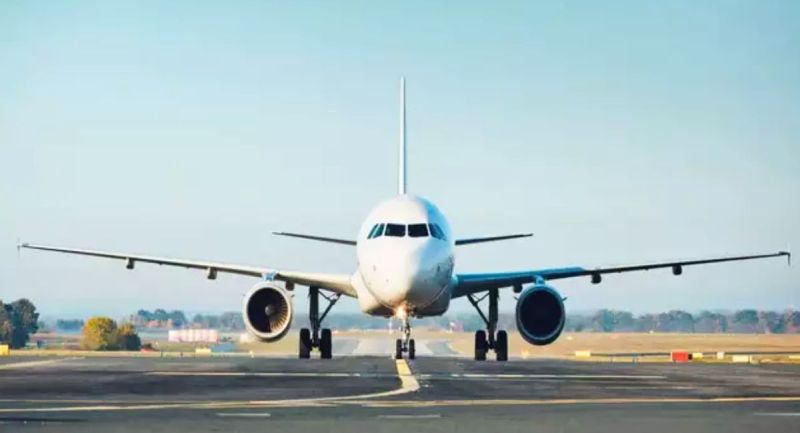
Conceptualised in 1997, the Navi Mumbai International Airport (NMIA) is now being compared to London’s iconic Heathrow Airport. Originally envisioned as an extension to the Chhatrapati Shivaji Maharaj International Airport (CSMIA), the NMIA was first proposed by the Ministry of Civil Aviation (MoCA) at Mandwa–Rewas with a single runway. However, as the vision expanded, the project evolved into a massive 1,160-hectare development featuring four terminals, expected to influence several cities and regions in Maharashtra. Of this, only one terminal will be inaugurated on October 8, by Prime Minister Narendra Modi; the remaining terminals are scheduled to be delivered in phases up to 2035-36.
Strategically located between Mumbai and Pune, NMIA is positioned to become a major catalyst for economic and infrastructural growth in both the Mumbai Metropolitan Region (MMR) and Pune Metropolitan Region (PMR). By enhancing connectivity across six districts—Mumbai city, Mumbai suburbs, Thane, Raigad, Palghar, and Pune—the project holds the potential to transform Maharashtra into a global tourism and business hub. It also offers an opportunity for inclusive development, extending the benefits of progress to even the most marginalized communities.
An inspiring example of such transformation can be seen in Gujarat’s Ekta Nagar in Narmada district, popularly known as the Statue of Unity (SoU). Home to the world’s tallest statue, rising 182 meters in the midst of the Narmada River, the SoU has become a vibrant tourism hotspot. Surrounded by various attractions, it draws thousands of tourists daily, generating substantial employment for local residents across genders and age groups.
Similarly, NMIA could become a game-changer for Maharashtra’s economy. Its location is surrounded by several key tourist destinations, including Alibaug, Lonavala, Mahabaleshwar, Pune, Igatpuri, and the historic Raigad Fort, which is listed as a UNESCO World Heritage Site along with 11 other forts in the state. With proper development and global-standard infrastructure, these destinations could attract a surge of domestic and international tourists once NMIA becomes operational.
Vijay Singhal, Vice-Chairman and Managing Director of CIDCO, recently reaffirmed this vision in a press conference, describing NMIA as a transformative project not only for Maharashtra but for the entire nation. He emphasized that both the airport and its supporting infrastructure will significantly contribute to Prime Minister Narendra Modi’s goal of achieving a USD 5 trillion economy.
To further enhance the region’s appeal, CIDCO has planned several ambitious developments, including Edu City, Medi City, Logistics Park, and Sports City. These complementary projects are expected to attract more visitors and stimulate additional investment in surrounding areas. With the subsequent rise of hotels, convention centres, and other tourism-driven projects, the NMIA could redefine the future of MMR and extend its growth influence from Raigad to Pune. If executed effectively, the airport will not only elevate Maharashtra’s global standing but also reshape the socio-economic landscape of western India.